White Cliffs Of Dover Day Trip
Planning Guide

White Cliffs of Dover From London Train

Kent's chalk headland sits close enough to the capital that thousands of visitors reach it without a car, on a single ticket and a single change of shoes. This white cliffs of dover from london train guide sets out what the trip actually asks of you: the timings that matter, the cost of standing on the clifftop, and the practical shape of a day on the coast. Everything below comes from verified visitor information rather than guesswork.

15 min read Updated 2026-08-07 Fact-checked
White Cliffs of Dover From London Train

Quick answer

Reaching the White Cliffs of Dover from London by train is straightforward, and walking onto the cliffs themselves costs 0 GBP. The Langdon Cliffs site at Upper Road, Dover, Kent, CT16 1HJ is open 07:00–19:00 every day of the week, including weekends. Parking and the visitor centre carry separate charges. Trains arrive at Dover Priory, roughly a mile and a half from the clifftop path.

The chalk that gives the cliffs their colour is roughly 90 million years old, formed from the compressed skeletons of microscopic algae that settled on the floor of a warm sea. That geology is the reason the headland glows white in low sun and greys in overcast weather, and it is the reason the cliff edge continues to retreat by a few centimetres each year. Visitors planning the white cliffs of dover from london train route are heading for a landscape that is still, quietly, moving. What the reader is actually dealing with is a National Trust site rather than a ticketed attraction in the conventional sense. Langdon Cliffs sits above the Port of Dover on Upper Road, postcode CT16 1HJ, and the entrance fee to walk onto the cliffs is 0 GBP. The gates operate 07:00–19:00 seven days a week, a longer window than most heritage properties in Kent manage, which gives independent travellers unusual freedom over how they shape the day. The clifftop path runs east from the visitor centre towards the South Foreland Lighthouse, with the ferry terminal, the Port of Dover cranes and, on clear days, the French coast at Cap Gris-Nez laid out below. This is chalk downland, not a museum: skylarks, Exmoor ponies grazing the grassland, and a National Trail surface that turns slick after rain. The main phone line, 01304 202756, reaches the site directly and is the fastest way to check conditions before committing to a fare. The context that makes all of this make sense is Dover's dual identity. The town is a working port first and a visitor destination second, so the cliff path shares its horizon with freight lanes, Dover Castle's Norman keep and the wartime tunnels cut into the chalk beneath. Anyone comparing Kent landmarks will find the site unusual in that the headline experience — the view — is free, while the supporting infrastructure is not. That distinction matters when budgeting. It also explains why a Dover coast day trip can be scaled up or down: the cliff walk alone fills two hours; add the lighthouse and it fills most of an afternoon. What to do with the answer is simple enough. Treat the 07:00–19:00 window as the outer frame and build inwards, accepting that the site is genuinely open before most cafés in the town are. Footwear matters more than anything else you pack, because the path is grass and chalk rather than paving, and the edge is unfenced in places. Weather on this stretch of coast changes faster than the forecast suggests; wind coming off the Strait can make a mild day feel raw. A guide to reaching the white cliffs of dover from london train inevitably comes back to the same point: the journey is the easy part, and the decisions worth making are the ones taken once you are standing on the grass. Check the site's own updates before travelling, since grazing rotations and path diversions are announced locally rather than nationally, and the official National Trust page carries the current position.

“The headline experience — the view — is free, while everything supporting it is not.”
Directions

White Cliffs of Dover From London Train: How to Get There

The White Cliffs of Dover visitor area sits at Langdon Cliffs, just outside Dover, and the simplest rail arrival is Dover Priory station. From London, train in to Dover Priory first, then finish by walking, taxi, or local bus to the cliffs.

Train 1 hr 5 min to 2 hr 15 min

Southeastern high-speed from London St Pancras International to Dover Priory; slower London Victoria or London Charing Cross services also run to Dover Priory

On foot 40 min

Follow the brown walking signs from Dover Priory to Langdon Cliffs, Upper Road, CT16 1HJ

Taxi 10 min

Taxi from outside Dover Priory station to the White Cliffs visitor area at Langdon Cliffs

Bus 20 min bus plus 30 min walk

Dover town bus terminal on Pencester Road, then walk through town and follow NT-branded signs to the cliffs

Use the Langdon Cliffs, Upper Road entrance for the main visitor approach. If you are arriving by train, the brown-signed walking route from Dover Priory is the most direct option, but a taxi is the quickest finish after the rail journey.

Timing

Best Time for White Cliffs of Dover From London Train Visitors

The best single window is late spring to early autumn, with an especially strong case for weekday mornings in April, May, or October. That timing pairs milder weather and longer daylight with lighter rail-day-trip crowds before late-morning arrivals build up.

Spring (April–May)

lighter than summer weekends

April ~12.25°C/3.70°C; May ~15.97°C/9.47°C

Spring gives a better balance of crisp visibility, comfortable walking temperatures, and fewer peak-season crowds. Aim to arrive as close to opening as you can for cleaner views and easier pacing.

Weekday mornings

quietest arrival window

Tuesday to Thursday mornings are the easiest time to find a calmer clifftop and avoid the mid-day surge from London day-trippers. Morning light also tends to be better for long Channel views.

Summer (June–August)

busiest, especially weekends

June ~18.52°C/12.37°C; August ~21.13°C/14.76°C

Use summer only if you want the longest daylight and warmer conditions. Go early in the day, because later trains and weekend arrivals usually mean more people on the paths.

Autumn (September–October)

good balance, fewer crowds

September ~19.07°C/12.90°C; October cooler

Early autumn is often the most practical compromise: still bright enough for clear views, but usually calmer than midsummer. October is also a sensible fallback if you want a quieter visit before winter shortens the day.

Winter (November–February)

quietest, shortest days

cooler, wetter, windier

Winter can work for very low crowd levels, but shorter daylight and less settled conditions make it less reliable for a rail day trip. If you choose it, prioritise a morning arrival and check the forecast closely.

Verdict: Best slot: Tuesday to Thursday, arrive at opening, with April or October offering the best mix of light, temperature, and fewer crowds.

Itinerary

White Cliffs of Dover From London Train: A Simple Day-Trip Itinerary

This plan suits first-time visitors travelling out from London with no car, covering roughly eight hours door to door including train time. Trim the Fan Bay leg and it compresses into a comfortable half-day.

07:30

Leave London

Board a Dover-bound service from St Pancras or Victoria and allow around two hours travel, arriving at Dover Priory for the 07:00–09:30 arrival window if you take an earlier train.

09:30

Walk up to Langdon Cliffs

Head from Dover Priory to Langdon Cliffs, Upper Road, CT16 1HJ. Budget 40–50 minutes on foot uphill, or use a taxi if you want to protect walking energy for the clifftop.

10:15

Clifftop path east

Follow the National Trust path along the cliff edge towards South Foreland. The main out-and-back stretch takes 60–90 minutes at an unhurried pace; the ground is grass and chalk, so sturdy shoes matter.

11:45

South Foreland Lighthouse turn

Reach the lighthouse, the natural halfway marker. Check its own seasonal opening before you set out, since the cliff path itself is free to walk and open 07:00–19:00 daily.

12:45

Fan Bay Deep Shelter option

If you have booked a tour slot, allow an extra hour here including the descent and briefing. Skip it and you gain that hour back for the return leg.

14:30

Return along the clifftop

Retrace the path west towards Langdon Cliffs, then descend to Dover Priory. Leave 60 minutes for the walk down plus platform time.

16:00

Train back, or Canterbury

Most people head straight back to London. Swapping to a Canterbury stop adds two to three hours, so it only works if you started before 08:00.

Prices

Is the White Cliffs of Dover Free on a London Train Day Trip?

Admission is free to walk onto the White Cliffs of Dover, so the main costs on a London train day trip are usually your transport and, if you arrive by car, parking-related charges. The official site also notes extra tickets only for specific add-ons such as Fan Bay Deep Shelter.

Free cliff access Walk onto the cliffs free
GBP 0
Car parking (per car) Applies to most drivers
GBP 6.00
Motorhome parking Per vehicle charge
GBP 9.00
Coach parking Group vehicle charge
GBP 25.00
Fan Bay Deep Shelter adult Add-on ticket only
GBP 15.00
Fan Bay Deep Shelter child Add-on ticket only
GBP 7.00
National Trust members and Blue Badge holders can park for free, and there is no admission charge to walk onto the cliffs.

Verdict: A typical adult pays GBP 0 for cliff access, with the main variable being whether you need parking or an add-on ticket for Fan Bay Deep Shelter.

Accessibility

White Cliffs of Dover From London Train: Accessibility and Mobility Notes

The White Cliffs of Dover visitor centre is the most mobility-friendly part of the site, with level access and accessible toilets at the rear of the building. Beyond the visitor centre, the cliff paths include steep, uneven sections and steps, so wheelchair access is limited outside the main facilities area.

Wheelchair access

The visitor centre is wheelchair-friendly, but cliff paths beyond it include steep, uneven sections and steps.

Partial
Step-free routes

There is accessible viewing access near the visitor centre, but farther routes are not step-free.

Partial
Lifts

No lifts are listed in the official access information.

None
Accessible toilets

Accessible toilets are available at the rear of the Visitor Centre.

Full
Hearing & visual aids

Induction loop technology is available at the Visitor Centre.

On request
Quiet times

No official quiet-time access option is listed.

None
What to see

White Cliffs of Dover From London Train: What to See on the Cliffs

The main stops on a White Cliffs of Dover visit are clustered around the cliff-top paths north of Dover: the viewpoints over the English Channel, the White Cliffs Visitor Centre area, Fan Bay Deep Shelter, and South Foreland Lighthouse. If you are coming from London by train, these are the named places to look for on the walk rather than treating the cliffs as one single viewpoint.

Clifftop viewpoints

Clifftop viewpoints

These are the open paths and high lookouts above the sea, where the classic chalk-edge scenery is most visible. They are the simplest part of the visit and connect the Visitor Centre with the shelter and lighthouse routes.

Pause on the sea-facing path, not just at the visitor centre.
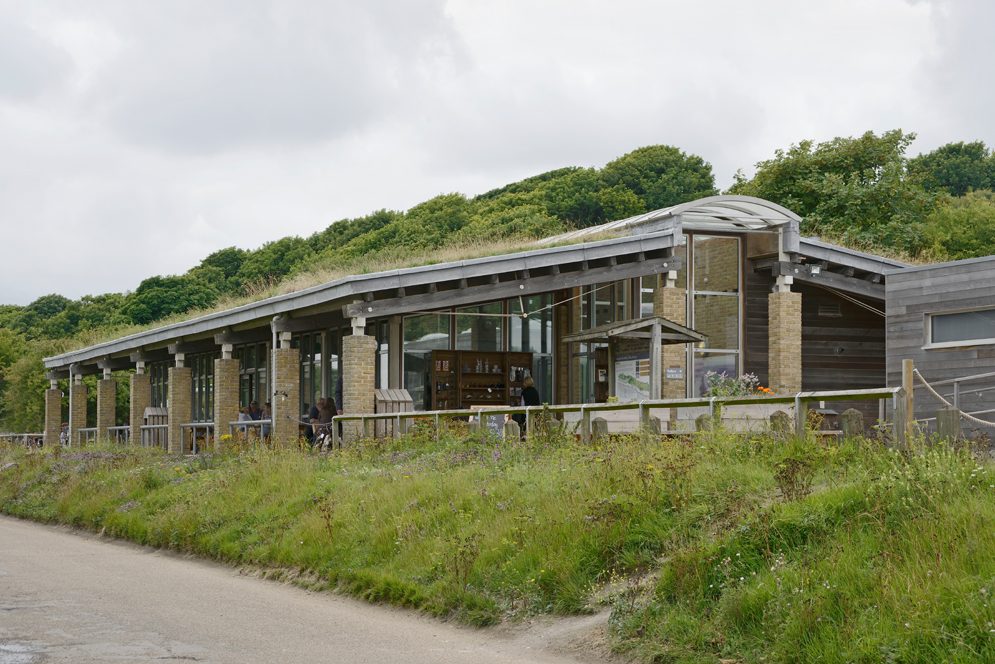
White Cliffs Visitor Centre

White Cliffs Visitor Centre

The visitor-centre area is the practical starting point on the Langdon Cliffs side, with trail access toward the cliff-top walk. It is the place to orient yourself before following the signed route to the other named sights.

Check the trail map before leaving the building.

Fan Bay Deep Shelter

Fan Bay Deep Shelter

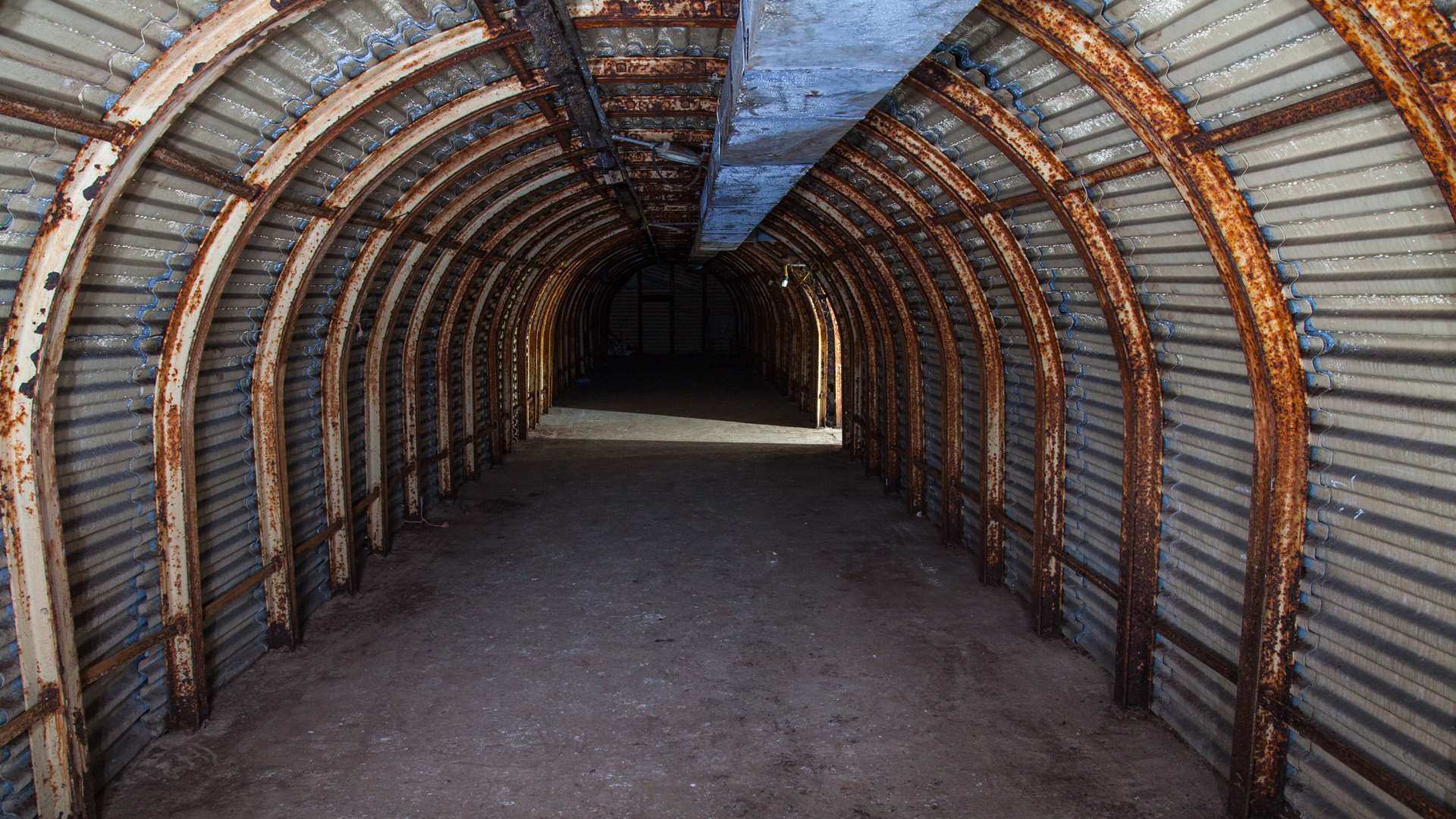
Fan Bay Deep Shelter is the underground Second World War shelter on the cliff route, visited as a separate named stop from the open clifftop. It gives a different kind of experience from the views outside, so it is worth planning time for the descent and return.

Do not rush past the shelter entrance.

South Foreland Lighthouse

South Foreland Lighthouse

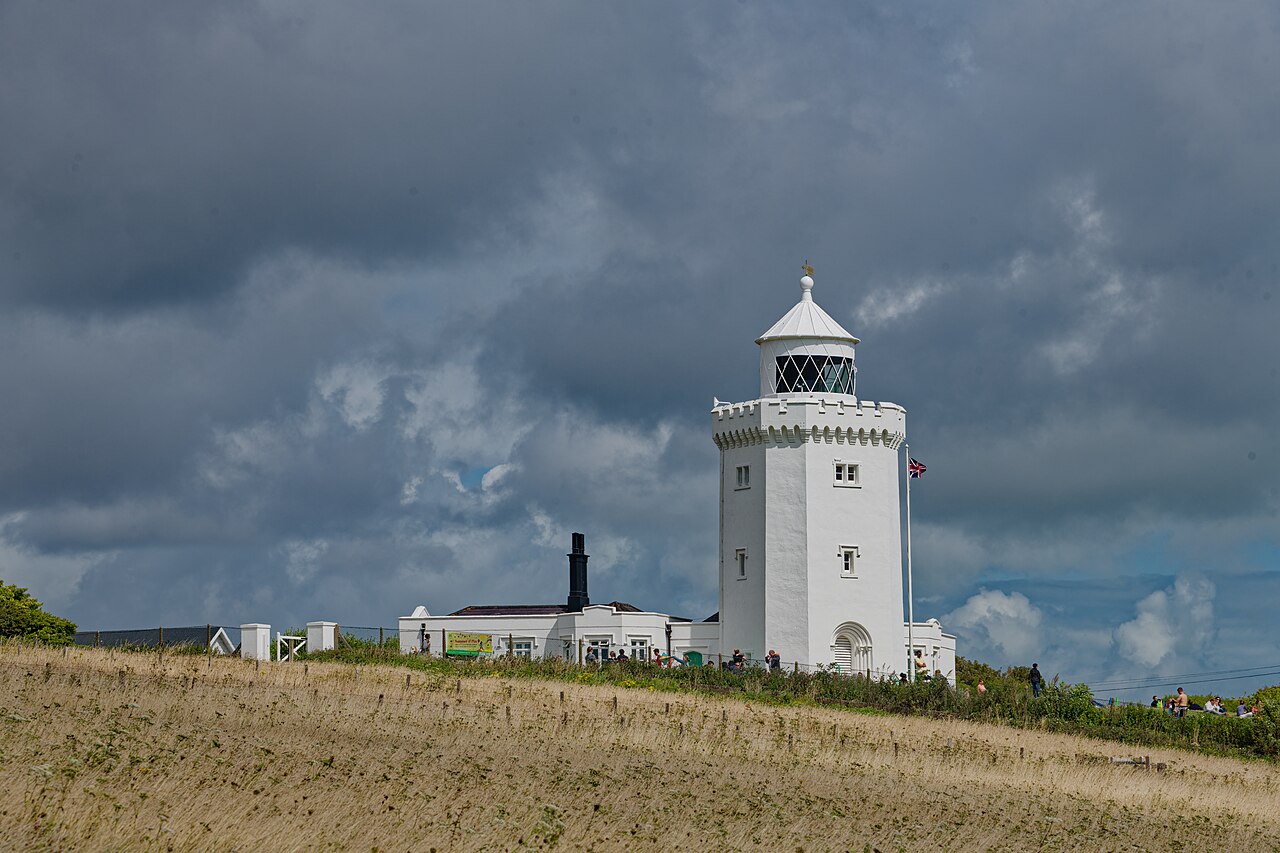
South Foreland Lighthouse is the working lighthouse stop further along the cliff path, and it is one of the clearest named landmarks on this route. It sits beyond the first viewpoint section, so many visitors miss it if they stop too early.

Walk on to the lighthouse, not just the first viewpoint.

Dover Strait edge

Dover Strait edge

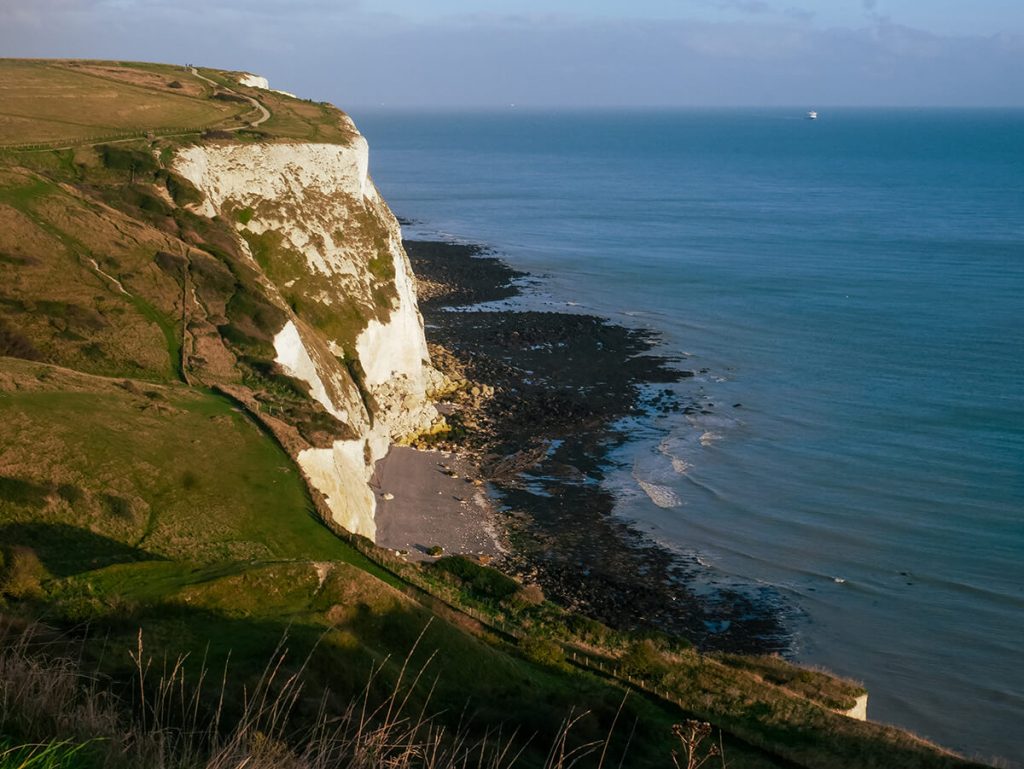
The cliff-top edge overlooking the Dover Strait is the defining landscape feature of the route, with the sea views changing as you move along the path. It is the best place to understand how the Visitor Centre, shelter, and lighthouse fit together on one walk.

Keep walking between landmarks for the full cliff sequence.

Langdon Cliffs

Photography

Best Photo Spots for White Cliffs of Dover From London Train

Visitor Centre upper viewpoint

Visitor Centre upper viewpoint

Early morning

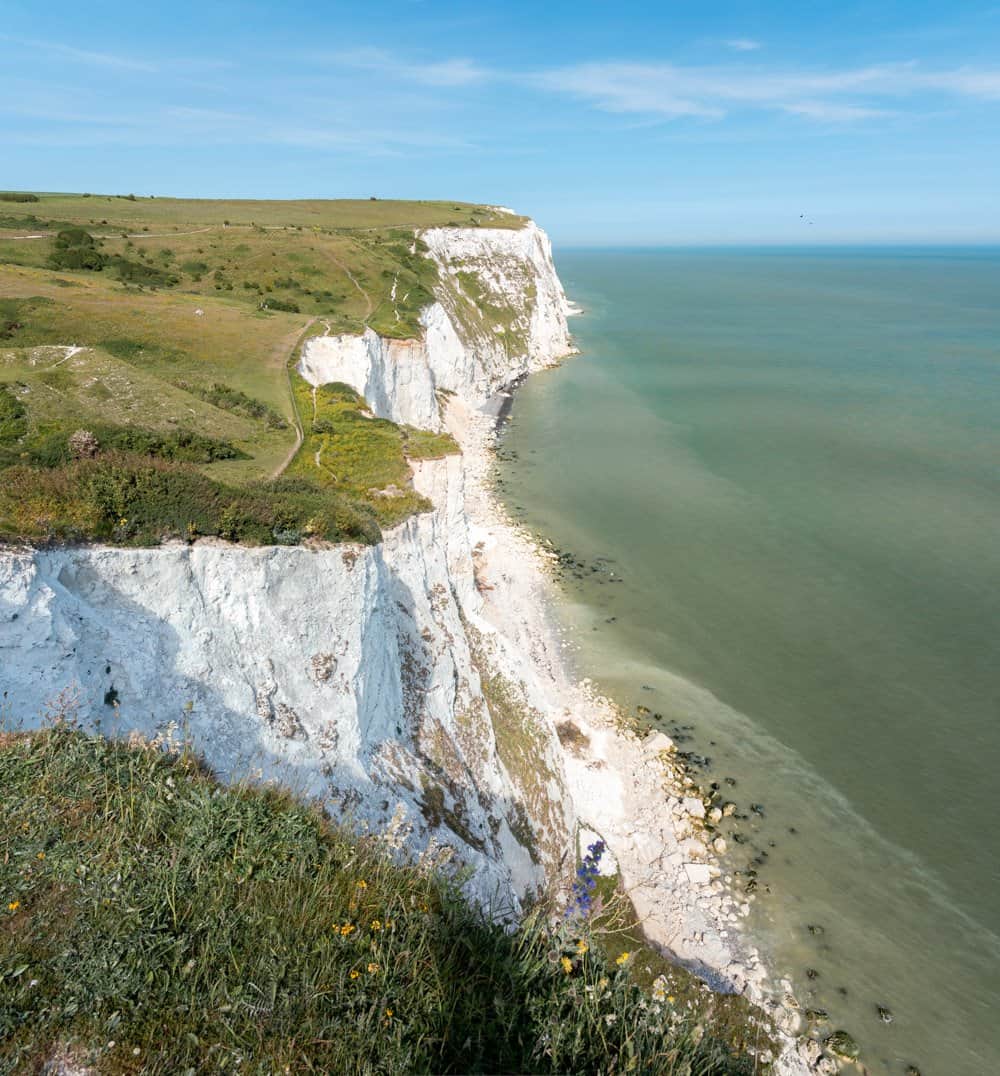
Start at the level viewpoint above the Visitor Centre for a wide cliff-and-sea composition, with the chalk face filling one side of the frame and the Channel opening out beyond it. This is the cleanest first stop if you want a simple, findable overlook before heading farther along the path.

Langdon Cliffs viewpoint

White Cliffs of Dover viewpoint

White Cliffs of Dover viewpoint

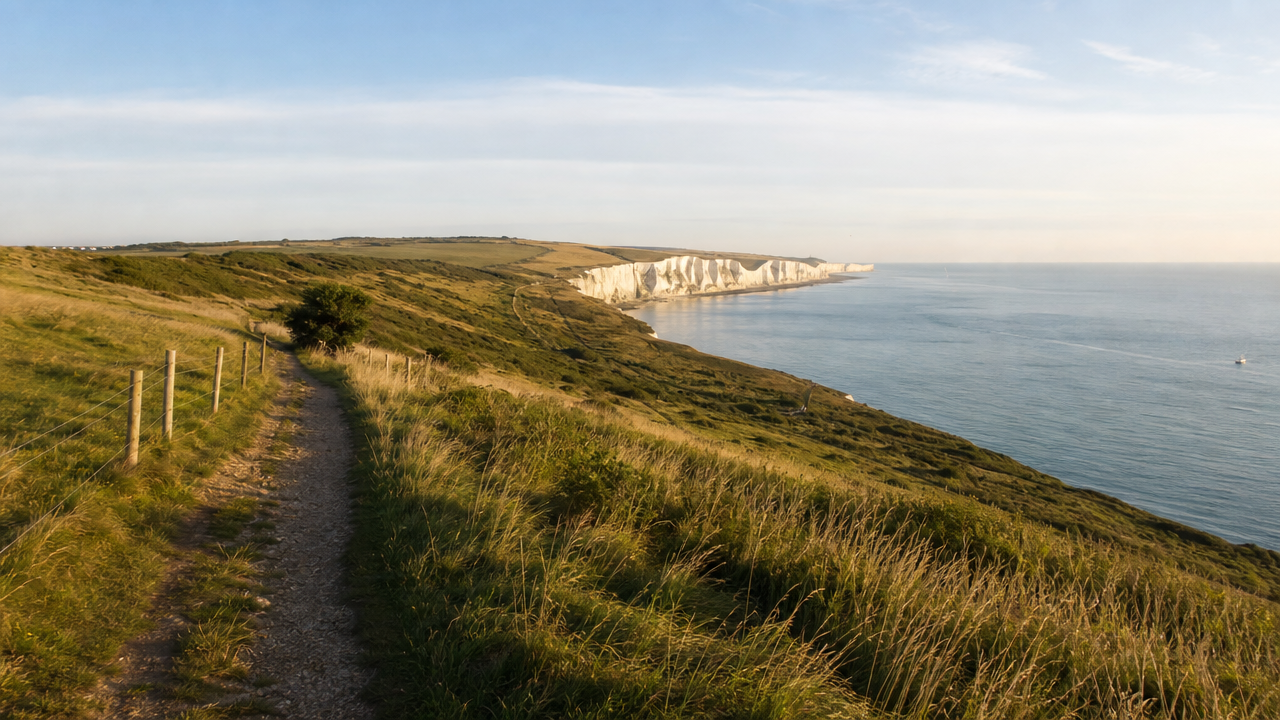
Use the cliff-top path after the Visitor Centre to frame the slope of Langdon Hole with the sea behind it; the path gives a stronger sense of depth than the main overlook. Keep back from the edge and treat this as a walking view rather than a fixed platform.

Langdon Hole path

White Cliffs of Dover path

Dover cliff path

Dover cliff path

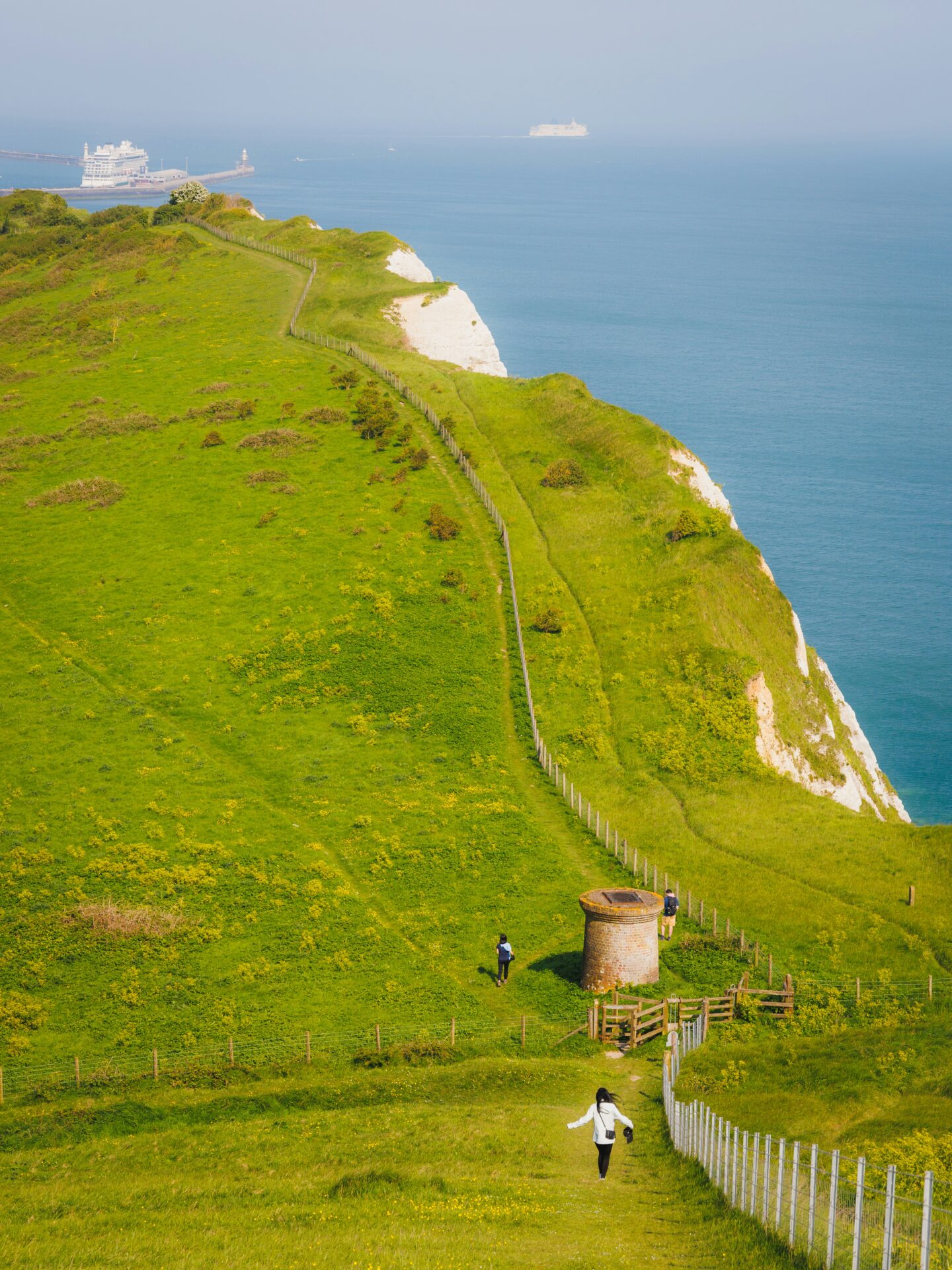
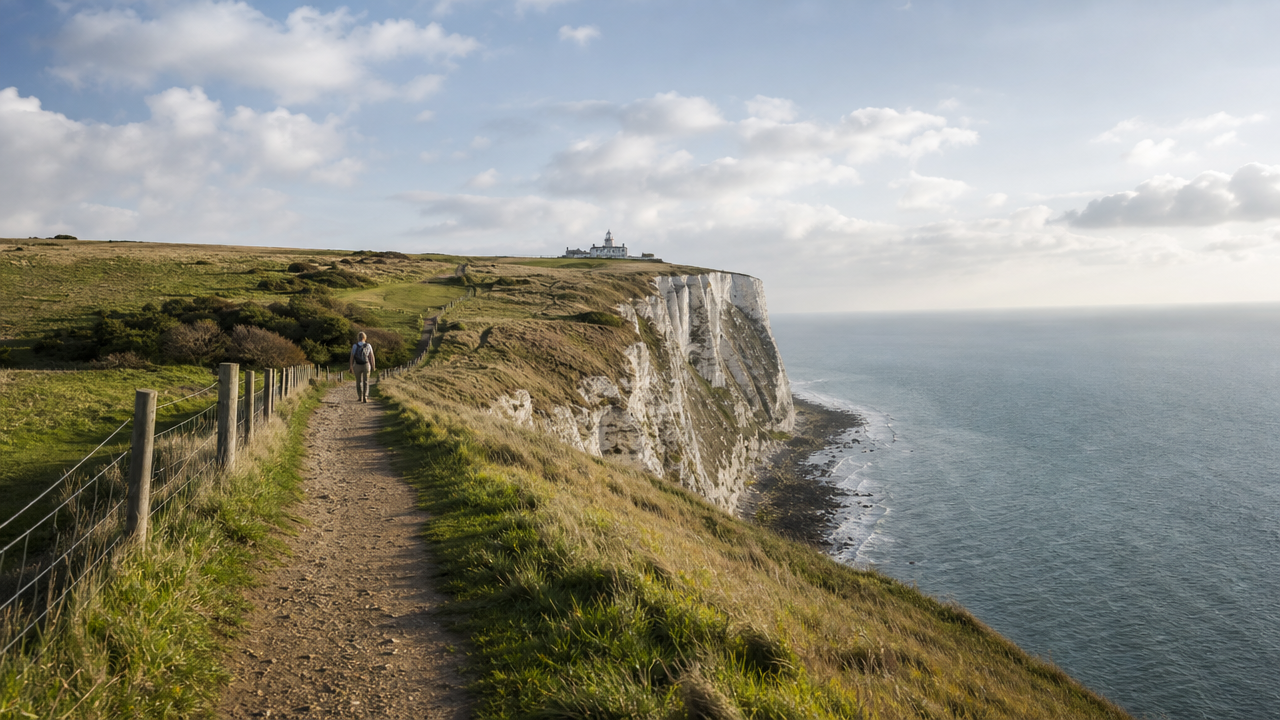
Follow the coast path toward South Foreland Lighthouse for long, lateral shots of the cliff line and open water, especially where the track bends and reveals the drop-off in layers. This is the best area for a more expansive shoreline feel rather than a single cliff portrait.

South Foreland coast path

South Foreland Lighthouse path

White Cliffs coast path

From the lighthouse grounds, turn back toward the cliffs for a broader landscape that pairs the white downland with the tower and sea in one frame. It works well as a destination shot after the walk, with enough open space to compose the cliffs cleanly.

South Foreland Lighthouse grounds

White Cliffs of Dover

South Foreland grounds

If you continue past the main viewpoint toward Fan Bay, look for openings in the path where the cliff line and headland fall away into the sea; these spots are better for wide scenic images than close detail shots. Use them for one strong context photo before returning.

Fan Bay viewpoint

Fan Bay Deep Shelter

White Cliffs of Dover

Insider tips

Practical Tips for White Cliffs of Dover From London Train

Use these practical tips to make a White Cliffs of Dover day trip by train smoother and less rushed.

1

Footwear matters

Wear grippy walking shoes rather than smooth-soled trainers. Cliff paths can be uneven and slippery after rain, especially on grass or chalk edges.

2

Check the wind

If the forecast shows strong coastal gusts, expect the exposed top sections to feel much colder than London. Bring a light windproof layer even on a mild day.

3

Pack water early

Carry your own water instead of assuming you will want to stop for it later. You may spend longer on the clifftop than planned, and the walk back to the station can feel slower in heat or wind.

4

Leave train buffer

Build in a return buffer so you are not timing the outing to the minute. Weather, slower-than-expected cliff paths, and queueing for photos can easily add extra minutes before you head back.

5

Watch the ground

Keep an eye on the path surface when stepping off the main trail. After rain, chalk and mud can hide slippery patches near the edges.

6

Plan for cold shade

Even in summer, shaded stretches and breezier sections can feel noticeably cooler than the rest of the route. A compact extra layer is useful if you are staying out for more than a short visit.

Book

Check availability

Frequently asked

White Cliffs of Dover from London train FAQ

Everything you need to know about white cliffs of dover from london train

Can I do white cliffs of dover from london train as a day trip?

Yes. The White Cliffs of Dover work well as a day trip from London by train, with Dover Priory as the rail hub and a short onward transfer to the cliffs. The site is in Kent at Langdon Cliffs, Upper Road, Dover, Kent, CT16 1HJ.

How long does white cliffs of dover from london train take?

By train from London to Dover Priory, the fastest journey time is 1 hour and 5 minutes, while the average journey time is 1 hour and 49 minutes. After that, allow time for the onward transfer to the cliffs and your walk on the coastal paths.

What is the nearest station for white cliffs of dover from london train?

The nearest main rail stop is Dover Priory. From there, the cliffs are reached by local transport or onward travel rather than by a direct station-side entrance, so the train is only part of the trip.

Is white cliffs of dover from london train free to visit?

Yes, walking onto the cliffs is free. The National Trust page lists an entrance fee of 0 GBP, though parking and some separate on-site experiences can have charges.

What hours should I plan for white cliffs of dover from london train?

For the cliffs themselves, the canonical opening hours are Monday to Sunday, 07:00–19:00. The best arrival window is 07:00–09:30 for better light and fewer crowds.

Is white cliffs of dover from london train suitable with kids?

Yes. The route can work for families because the main cliff-top walk is outdoors and flexible, but you should still plan for wind, uneven ground, and a full day if you want to linger. The safest approach is to keep children on marked paths and build in extra time for stops.

What is the common mistake on white cliffs of dover from london train?

A common mistake is assuming the cliffs are a train-station walk-up with no onward transfer. Another is arriving too late and missing the best light window, which is 07:00–09:30.

Do I need to book anything for white cliffs of dover from london train?

You do not need to buy an admission ticket for the cliffs themselves because entry is free. If you plan to use parking or add paid on-site experiences, check the official National Trust page for current conditions before you go.

Keep reading

More guides & pages